Georgia French ’27
Staff Writer
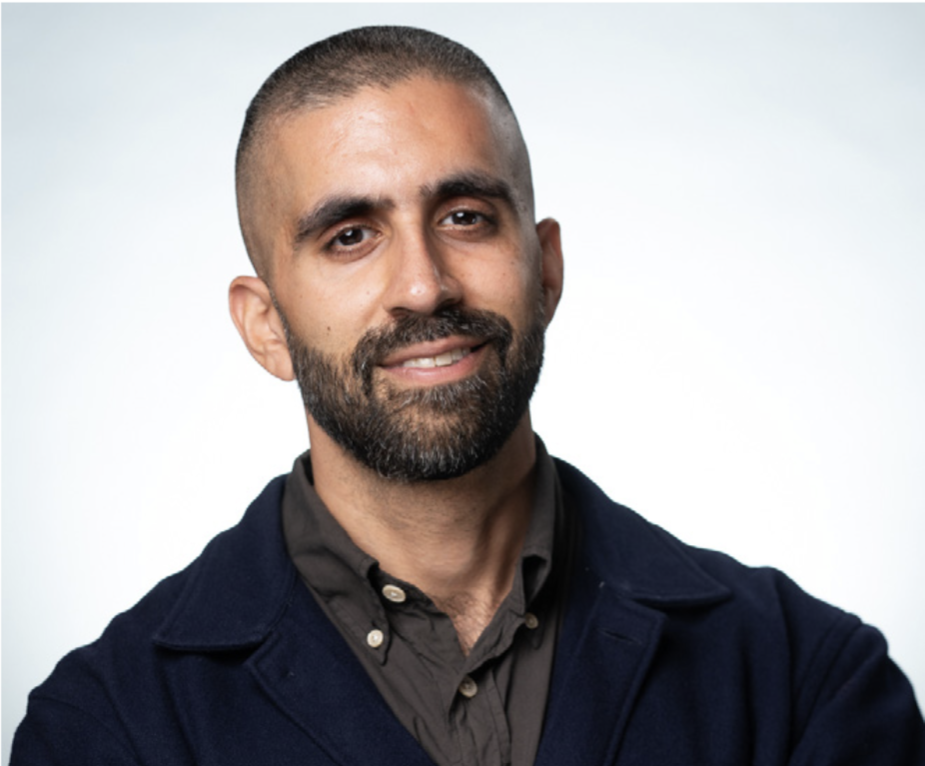
What is it about horror, supernatural, or weird movies that is just so damn intriguing? The shared quality these genres have feels difficult to pinpoint. After years of loving, watching, and thinking about this sort of media, I have become increasingly convinced that its indescribable quality is at the center of its appeal. In an attempt to put words to this feeling, I interviewed Pomona Professor Omer Shah, a scholar of Islam, anthropology, and all things strange and mysterious.
Omer’s conversation began with discussing one of his first classes at Pomona. Its working title was simply “Anthropology and Islam,” which he quickly realized was too constrained categorically. I have taken two classes of his now – The Unseen and The Unknown and The Horror of Everyday Life – and I can confidently say his anthropology classes are unlike any other at these colleges. He is not interested in deploying the usual set of operations of an anthropology class. While we read and analyze ethnographies, the analysis encouraged in class discussion exists in the in-between. Concrete and clean conclusions are not the goal, as is appropriate when dealing with such a human-centered field as anthropology. The messiness, nuance, and often irrationality of humanness are allowed in a way that is often minimized in systematized academia, anthropology included.
Anthropological ethnographies center cultures deemed foreign or somehow “other.” This othering, which is more or less inherent to the field, has obvious consequences. A desire to observe and understand can quickly lend itself to affirming preconceived beliefs. One of the main topics of The Unseen & The Unknown, subject to complicating any pre-existing assumptions, is witchcraft. We read Witchcraft, Oracles, and Magic among the Azande by E.E. Evans-Pritchard. On this topic, Omer elaborated,
“Witchcraft is this thing where we think this is gonna be a conversation of feminine knowledges, subalternate knowledges, queer knowledges, sure, but that’s the thing you already know. What I found exciting about witchcraft comes from an early anthropologist who questions: what about the witch who doesn’t have an image? What about this idea that any one of us could be a witch? That, to me, is a radical and exciting image, that elaborates something for me. That’s not to take anything away from our commitments to witchcraft as a femme, queer, subalternate knowledge, but it’s also to do the thing I think anthropologists are meant to do, which is: the thing is not what you think it is.”
“The thing is not what you think it is” felt like the overall premise of this class. I found this mode of thinking distinctly different from what is encouraged in most of the shows and movies that are coming out now. HBO Max’s The Pitt depicts every social minority they can fit into an episode, spelling out the intended message for viewers to a ridiculous degree. To summarize, every scene ends with something along the lines of, “and this is why you should treat single mothers with empathy.” Everything is exactly as you think it is. Whether it’s due to an assumption of media illiteracy or an accommodation to an audience whose undivided attention is impossible to attain, it makes for media that leaves no question unanswered, which is so boring.
One of my questions for Omer was on this note of the possibility within inconclusiveness. I asked, “It’s common for supernatural media to end unsolved… Do you have any thoughts about why this is? How does the meaning of these ominous endings differ from that of an unsolved true crime piece of media?” He replied,
“The immediate distinction that comes to my mind is [that] true crime works through a kind of incitement for our institutions to work. I think in a lot of exciting horror movies or supernatural films, what’s exciting about them is the brokenness of our institutions. I think we can all acknowledge that there’s something not working in our institutions, whether they’re science or policing or the law. True crime calls it into being, if only these things worked well. I think for the horror film, you get to see something beyond: that our institutions don’t quite have the answer for, and there’s horror in that. There’s anxiety. But there’s also maybe pleasure and potential for some of us in wondering what else can emerge. What else is possible, and, again, I think a lot of that can be a political vocabulary for us. There’s something very micro about true crime. There’s something darker and danker that I locate in horror.”
Towards the end of our conversation, I explained my dissatisfaction with newer media’s overly direct messaging and how everything is noticeably dumbed down. Omer happened to be reading a very topical book, Immediacy, or The Style of Too Late Capitalism by Anna Kornbluh, which argues that this style in culture is a symptom of our proximity to speed. Everything is expected to be quick, frictionless, and easily comprehended. These rules are seeping into every aspect of life, even movies! Don’t let it continue; please be curious, and allow yourself to be confused, I beg.